
THE XP-82 TWIN MUSTANG
The American Aircraft That Bridged World War II and the Space Age
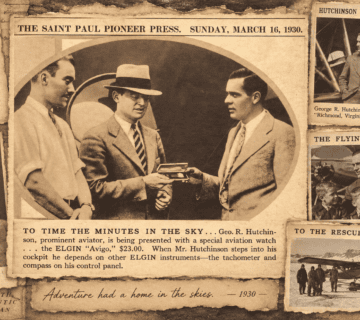
An American Aerospace Heritage Feature by AVIGO Watch Company
Two engines. Two fuselages. One extraordinary American story.
Chapter One
The Last Great Challenge of World War II
In the final years of World War II, American aviation had accomplished what once seemed impossible.
The United States had developed aircraft capable of crossing oceans, carrying enormous bomb loads, and striking targets thousands of miles from home. The Boeing B-29 Superfortress represented a new generation of strategic airpower, while the North American P-51 Mustang had become one of the most celebrated fighters of the war.
Yet a fundamental problem remained.
Bombers could fly farther than their fighter escorts.
Over Europe, the Mustang had helped solve this problem by providing long-range protection to American bomber formations. But the Pacific theater presented distances of an entirely different magnitude.
The vast expanses between island bases and potential targets demanded fighters capable of remaining airborne for exceptionally long periods.
Fuel was only one consideration.
A fighter pilot might be required to remain alert for many hours, enduring fatigue, isolation, and the physical demands of operating a high-performance aircraft.
American military planners needed an aircraft that combined the performance of a fighter with the endurance normally associated with much larger airplanes.
North American Aviation was given the challenge.
Its answer would become one of the most distinctive military aircraft ever constructed.
The XP-82 Twin Mustang.
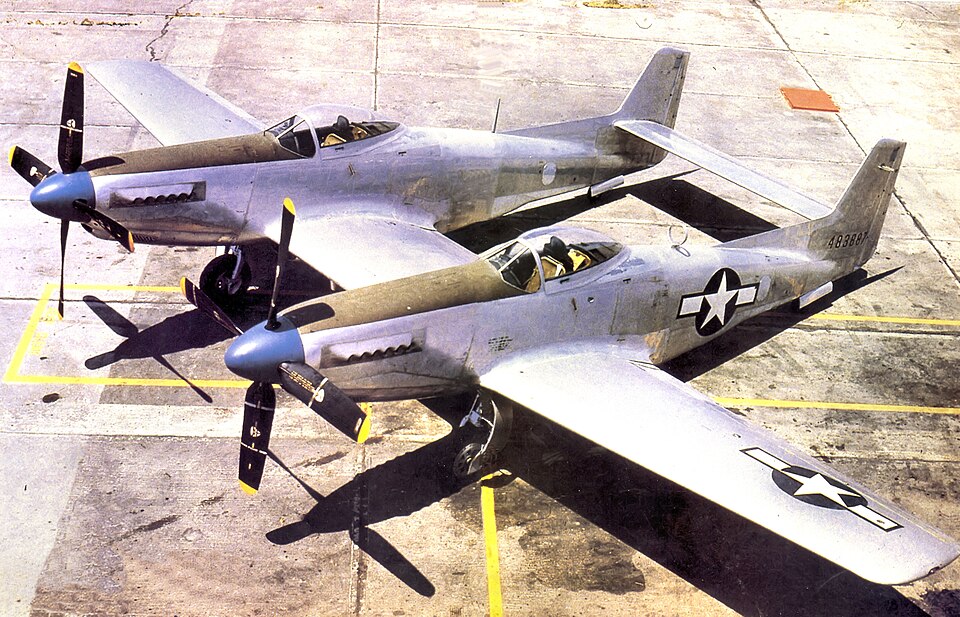
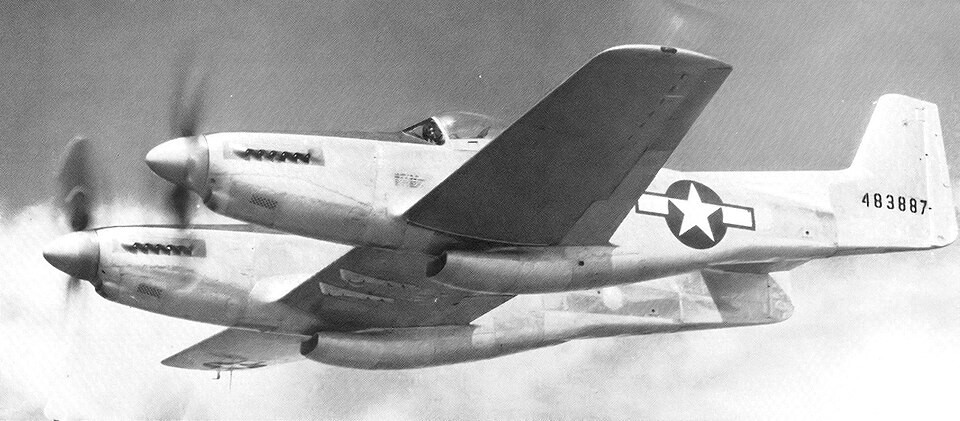
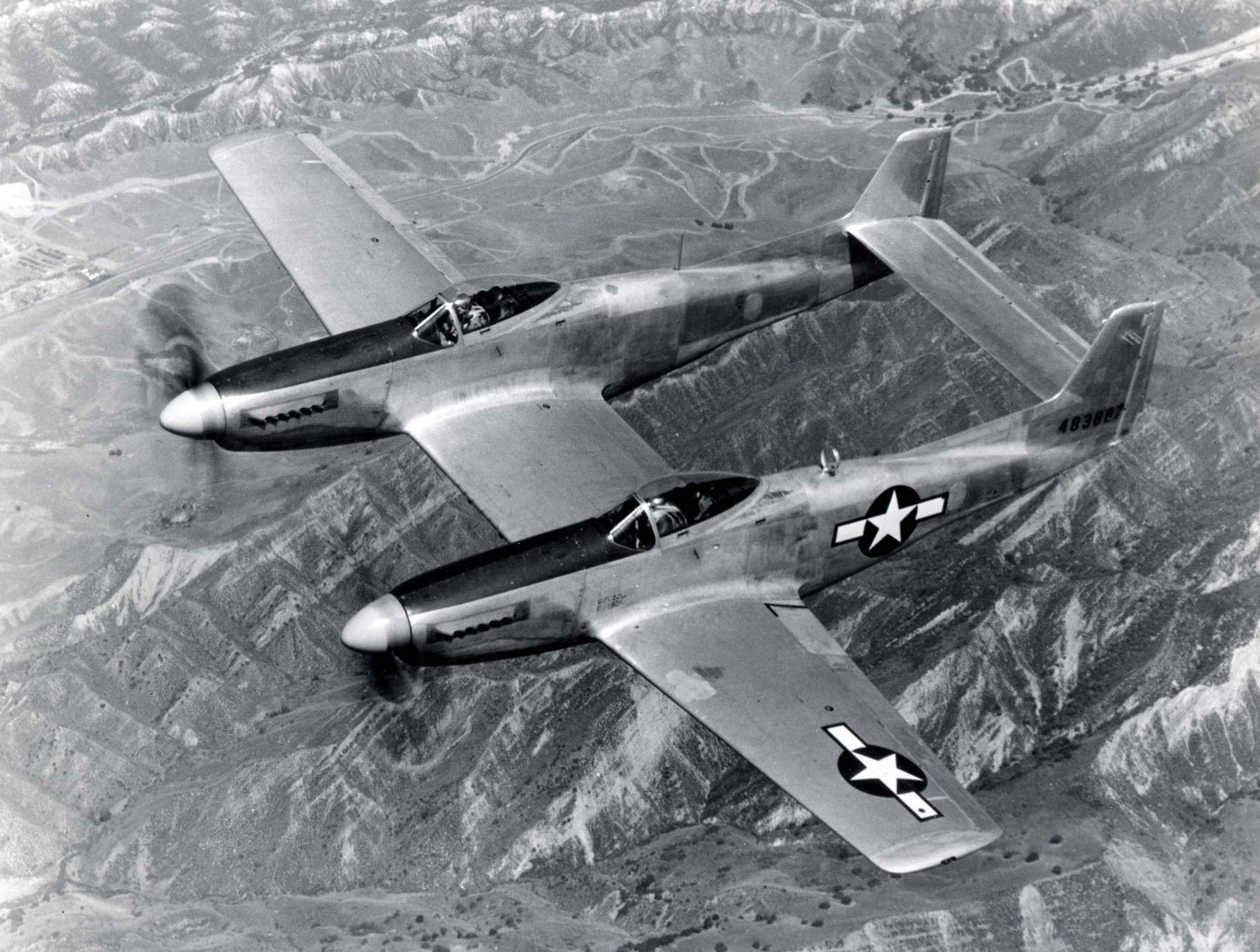
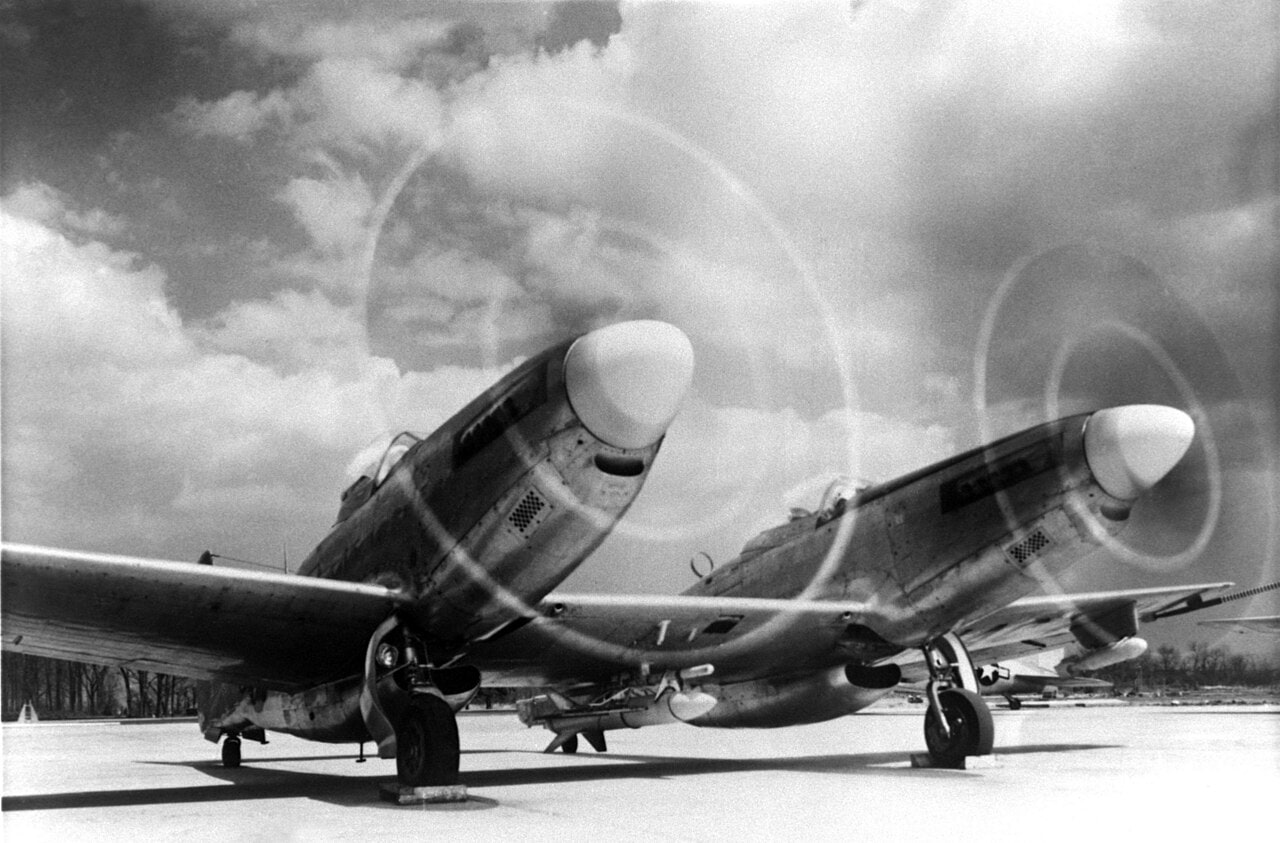
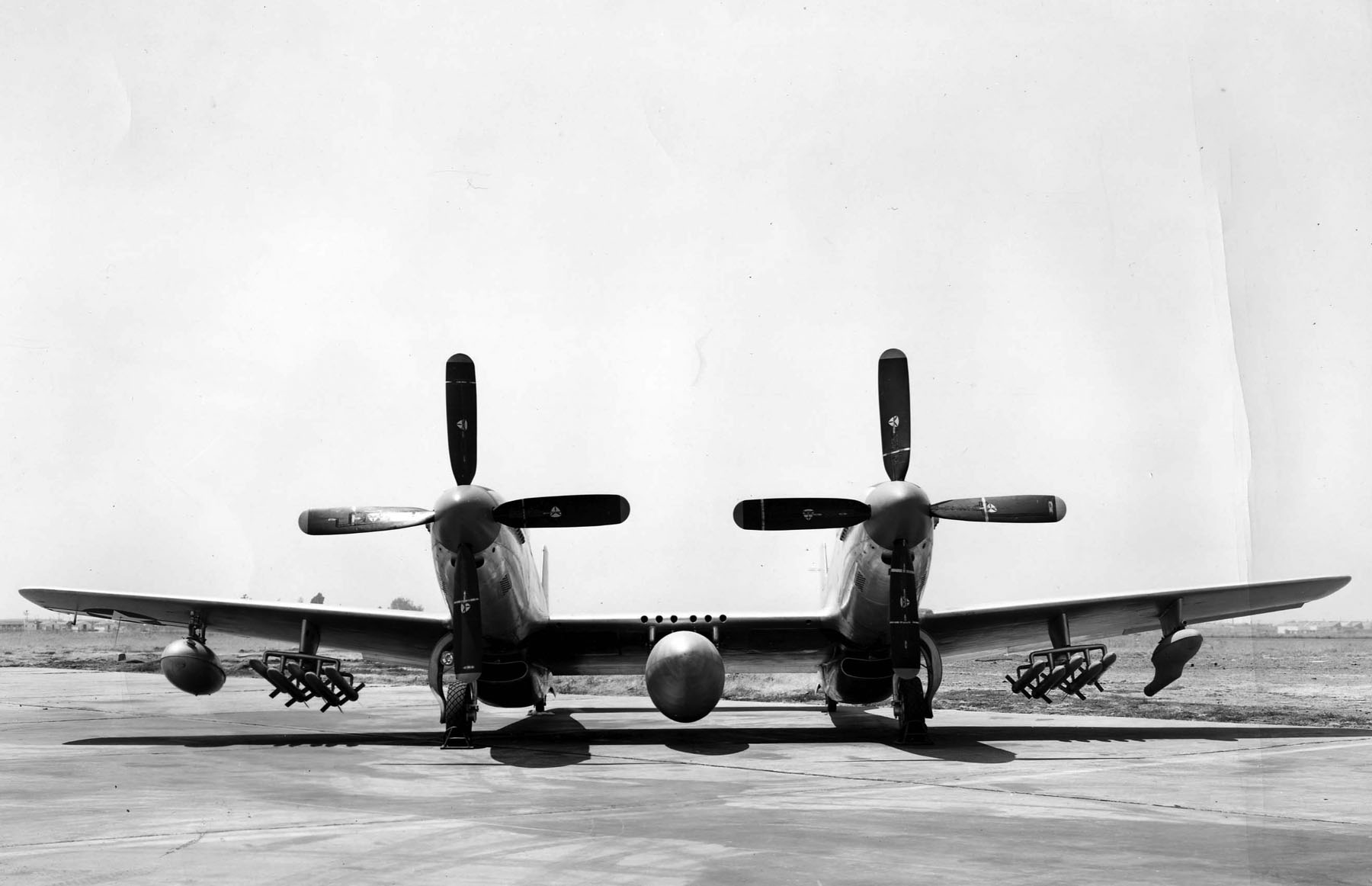
At first glance, the aircraft looked like two P-51 Mustangs joined by a wing.
But the reality was considerably more sophisticated.
North American’s engineers developed a new long-range fighter around two elongated fuselages, two engines, two cockpits, and a specially designed center wing.
The arrangement was intended to combine exceptional range with the ability for two crew members to share the demands of a lengthy mission.
The Twin Mustang was not simply a pair of existing aircraft bolted together. It was a purpose-built design that incorporated substantial structural and aerodynamic engineering.
It represented the extraordinary lengths to which American engineers were willing to go to solve a military problem.
By the time the prototypes began flying in 1945, however, the war was approaching its conclusion.
The aircraft had been designed for a conflict it would never enter.
That might have been the end of its historical significance.
Instead, the Twin Mustang would find an entirely different place in American aviation history.
Historical reference: NASA — The NACA’s XF-82 Twin Mustang Returns to Flight After 70 Years
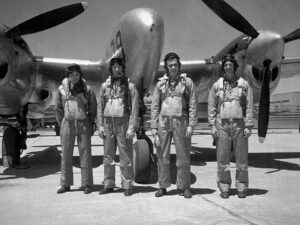
Suggested photograph: Original 1945 U.S. Air Force color photograph of XP-82 serial 44-83887.
Public-domain aircraft photograph
Chapter Two
Aircraft 44-83887: A Prototype With an Extraordinary Destiny
Every historic aircraft has a story.
Some become famous through combat. Others through record-breaking flights, technological achievements, or the pilots who flew them.
A very small number become important because their lives connect several distinct eras of aviation.
North American XP-82 serial number 44-83887 belongs to that category.
Built as one of two original XP-82 prototypes, the aircraft was part of the initial effort to demonstrate the feasibility of the Twin Mustang design.
Its experimental status is fundamental to its significance.
This was not simply another aircraft produced for military service. It belonged to the earliest stage of the Twin Mustang program, when engineers and pilots were still establishing what the new design could accomplish.
The airplane was powered by two Rolls-Royce Merlin-derived engines, providing the substantial power necessary to operate the twin-fuselage configuration.
The XP-82’s unusual appearance was dictated by its mission.
The two fuselages provided space for crew, fuel, and systems, while the common center wing created a platform that could accommodate additional equipment and military payloads.
The aircraft was conceived as a long-range escort fighter, but its size, power, and configuration also made it attractive for experimental work.
After the war, American aviation entered a period of rapid transformation.
Piston engines remained essential, but jet propulsion was beginning to redefine what aircraft could achieve.
The United States was no longer focused solely on building better combat aircraft.
It was investigating how to fly faster, higher, and eventually beyond the atmosphere.
Aircraft 44-83887 would become part of that transformation.
In October 1947, the National Advisory Committee for Aeronautics acquired the prototype for research at its Cleveland laboratory.
This decision gave the Twin Mustang an entirely new mission.
An airplane originally conceived to escort bombers across the Pacific would now help researchers investigate propulsion technologies for the next generation of high-speed flight.
Its second career would ultimately become one of the most compelling chapters in its history.
Historical references:
NASA — XP-82 research and restoration history
Wikimedia Commons — XP-82 44-83887 archival photograph
Chapter Three
Before NASA: The Scientists Who Were Building the Future
Long before Americans walked on the Moon, another organization was laying the foundations of modern aerospace engineering.
It was called the National Advisory Committee for Aeronautics, or NACA.
Established in 1915, NACA was responsible for conducting and coordinating research into the science of flight.
Its engineers investigated aerodynamics, aircraft structures, engine performance, high-speed airflow, and many of the technologies that would eventually become essential to the space program.
By the 1940s, NACA operated major research facilities throughout the United States.
Among them was the Aircraft Engine Research Laboratory in Cleveland, Ohio.
The laboratory would later become known as the NACA Lewis Flight Propulsion Laboratory and eventually NASA’s Glenn Research Center.
Cleveland was particularly important because it concentrated on propulsion.
Researchers there were studying the technologies that might allow aircraft and missiles to operate at speeds far beyond those achievable with conventional propeller-driven airplanes.
The challenges were formidable.
As aircraft approached the speed of sound, engineers encountered new aerodynamic and propulsion problems.
Airflow behaved differently. Temperatures and pressures changed dramatically. Engine performance became increasingly difficult to predict.
Wind tunnels could answer many questions, but they had limitations.
Some experimental propulsion systems needed to be studied under conditions that existing facilities could not reproduce adequately.
One solution was to carry experimental equipment into the sky and conduct tests during actual flight.
For this purpose, NACA needed an aircraft with sufficient range, altitude capability, payload capacity, and reliability.
The Twin Mustang was an attractive candidate.
Its powerful engines could carry the aircraft and its experimental equipment to the required altitude.
Its configuration provided room for external test installations.
And its two-person crew arrangement offered operational flexibility during demanding research missions.
The airplane that had been designed for long-range military operations was about to become a flying laboratory.
This connection is particularly meaningful because NACA was incorporated into the new National Aeronautics and Space Administration in 1958.
The XP-82 did not fly for NASA itself.
Its research career took place before NASA existed.
But the institution, scientific methods, personnel, and research infrastructure associated with the airplane were part of the foundation upon which NASA was built.
That is the authentic aerospace connection.
Not a marketing invention.
Not a retrospective association.
A documented role in the history of American aeronautical research.
Historical reference: NASA — The National Advisory Committee for Aeronautics
Chapter Four
The Ramjet Experiments: Carrying the Future Beneath Its Wings
Perhaps the most remarkable chapter in the history of XP-82 serial number 44-83887 began when NACA engineers adapted the aircraft to carry experimental ramjet-powered missiles.
To understand the importance of these tests, it is necessary to understand the engine itself.
A conventional piston engine uses mechanical components to compress and ignite a fuel-air mixture.
A turbojet uses rotating compressor machinery to draw in and compress air before combustion.
A ramjet operates differently.
It relies on the forward motion of the vehicle to force air into the engine, compressing it through the design of the inlet.
Fuel is then introduced and burned, producing thrust.
Because a ramjet has no conventional rotating compressor, it can offer important advantages at high speeds.
But there is a fundamental problem.
A ramjet cannot produce useful thrust from a stationary start.
It must first be accelerated to a sufficient speed.
That made flight testing especially challenging.
NACA’s solution involved carrying experimental ramjet missiles aboard another aircraft, bringing them to a suitable altitude and speed, and then conducting powered tests.
The XP-82 became one of the aircraft used for this work.
The experimental missiles were approximately 16 feet long.
They were carried beneath the aircraft’s right wing, an extraordinary sight on an airplane originally designed as a propeller-driven fighter.
The Twin Mustang’s own Merlin engines provided the power needed to carry the experimental equipment into the air.
Once the aircraft reached the designated test conditions, the ramjet experiment could begin.
According to NASA’s historical account, research pilots flew the aircraft to approximately 30,000 feet and Mach 0.5 before initiating the experimental engine sequence.
The ramjet-powered missile accelerated while instruments transmitted pressure and temperature measurements to researchers on the ground.
The experimental vehicle ultimately impacted the ocean after completing its mission.
These were not routine weapons exercises.
They were research flights intended to help engineers understand propulsion behavior under conditions that could not readily be duplicated in available wind tunnels.
The data contributed to the expanding knowledge of high-speed propulsion.
And the XP-82 provided the essential airborne platform.
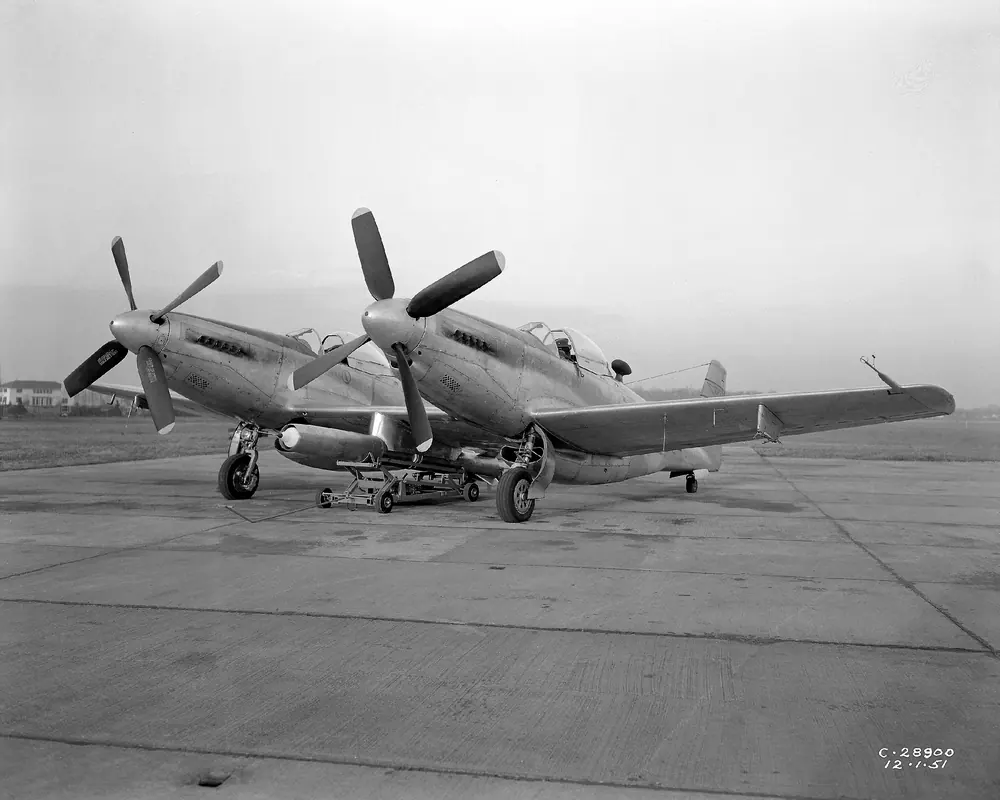
April 22, 1949: A remarkable photograph
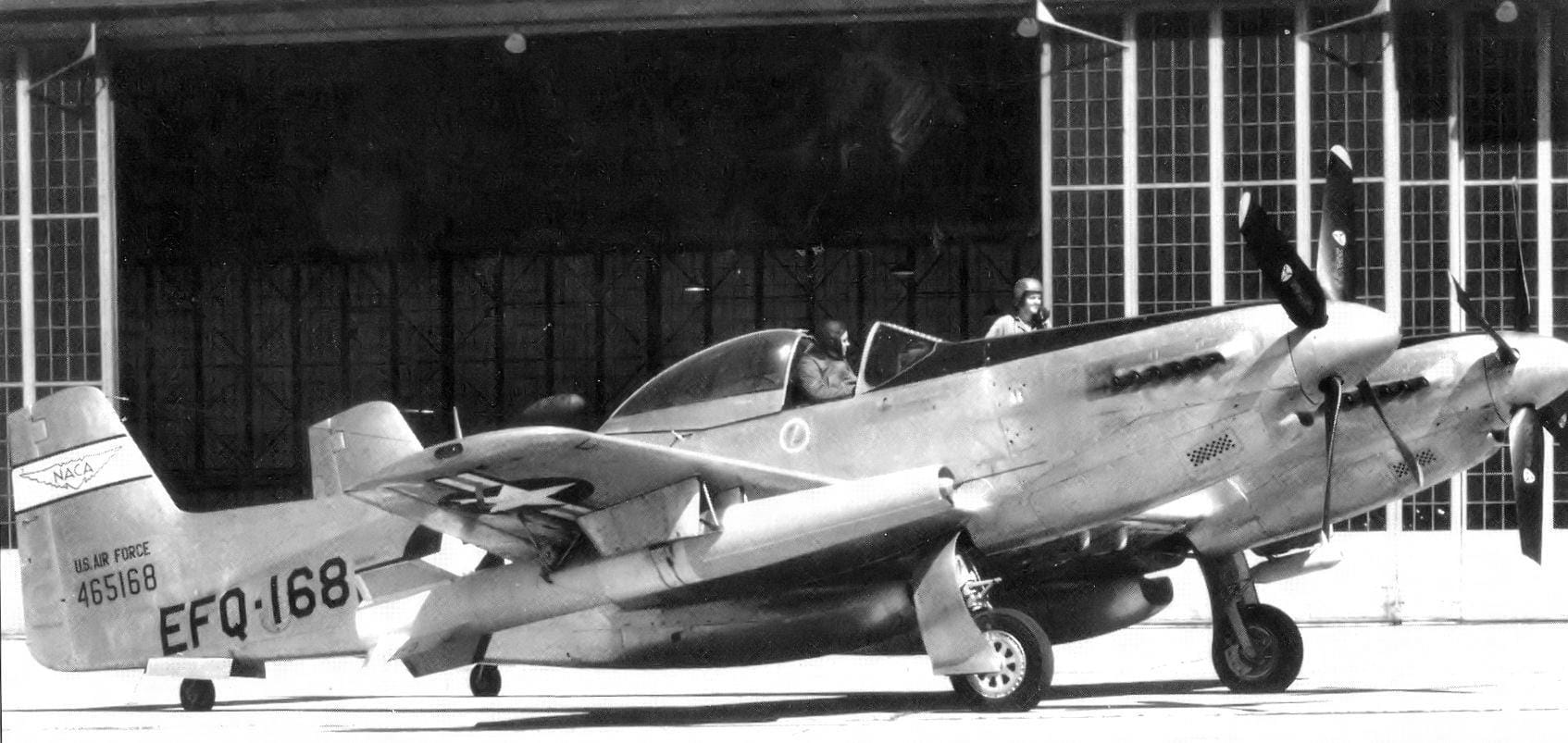
One surviving NASA photograph captures the XP-82 preparing for takeoff with an experimental ramjet missile beneath its right wing.
The photograph is dated April 22, 1949.
It is among the most historically valuable images associated with the aircraft.
The picture shows an unmistakable meeting of two aviation eras.
Above the runway stands a twin-engine, piston-powered fighter prototype whose origins lie in World War II.
Beneath its wing hangs experimental equipment intended to help unlock the future of high-speed flight.
It is a visual representation of America’s transition from propeller-driven military aviation to the jet and missile age.
For AVIGO’s American Aerospace Heritage Collection, this image is especially significant.
It illustrates precisely why the aircraft deserves recognition beyond its unusual design.
The XP-82 was not merely a surviving warbird.
It participated in the research that helped America understand the technologies of its aerospace future.
Primary historical source and original photograph:
NASA — The NACA’s XF-82 Twin Mustang Returns to Flight After 70 Years
Suggested photograph: NASA’s April 22, 1949 image showing the ramjet missile beneath the right wing.
Suggested caption: “North American XF-82 serial number 44-83887 preparing for a NACA research flight with an experimental ramjet missile beneath its right wing, April 22, 1949. Courtesy NASA.”
Chapter Five
The Men Who Flew the Experiments
Aircraft do not create history by themselves.
Behind every technological breakthrough are the people willing to test ideas whose outcomes are not yet fully understood.
The XP-82’s NACA research program involved pilots operating an unusual aircraft while supporting experiments in high-speed propulsion.
Two names stand out in NASA’s account of the program:
Joseph A. Walker and William Swan.
Their work placed them at the intersection of traditional military aviation and the emerging world of experimental aerospace research.
Joseph A. Walker: From research pilot to space pioneer
Joseph Albert Walker would become one of the most accomplished American research pilots of his generation.
During his career, Walker participated in demanding experimental flight programs and developed a reputation for exceptional skill.
His later association with the North American X-15 rocket plane would secure his place in aerospace history.
The X-15 was designed to investigate flight at extreme speeds and altitudes.
Unlike conventional aircraft, it used rocket propulsion and was released from a carrier aircraft before beginning its powered flight.
The program produced vital information about hypersonic aerodynamics, high-altitude control, structural heating, and the challenges associated with operating near the boundary of space.
Walker eventually flew the X-15 above the altitude recognized by the U.S. military as the boundary of space.
Those flights made him one of the earliest American pilots to reach space under that definition.
His earlier participation in NACA research involving the Twin Mustang gives the XP-82 story a remarkable human connection.
A pilot associated with experiments conducted from a piston-powered fighter would later fly a rocket-powered research aircraft into space.
It illustrates the extraordinary speed of American aerospace progress during the middle of the twentieth century.
Within less than two decades, American research aviation moved from wartime fighter technology to piloted rocket aircraft operating at the edge of space.
Walker was part of that transformation.
William Swan: A pioneer of experimental propulsion research
William Swan, whose surname is also encountered as Swann in some historical photo captions, was another pilot associated with NACA’s ramjet flight program.
His role deserves recognition alongside Walker’s.
The research flights required careful coordination between pilots, engineers, ground crews, and scientific personnel.
The airplane had to reach the correct conditions for each experiment.
The crew needed to maintain precise control while operating an aircraft carrying unusual external equipment.
Researchers depended on the pilots to execute the test sequence accurately.
The resulting measurements would be valuable only if the flight conditions were properly established and recorded.
Swan’s contribution belongs to the broader story of NACA’s experimental pilots: men whose work often received less public attention than combat aviation, but whose efforts helped engineers develop the technologies of future aircraft.
Their names should not disappear from the history simply because the aircraft itself is more recognizable.
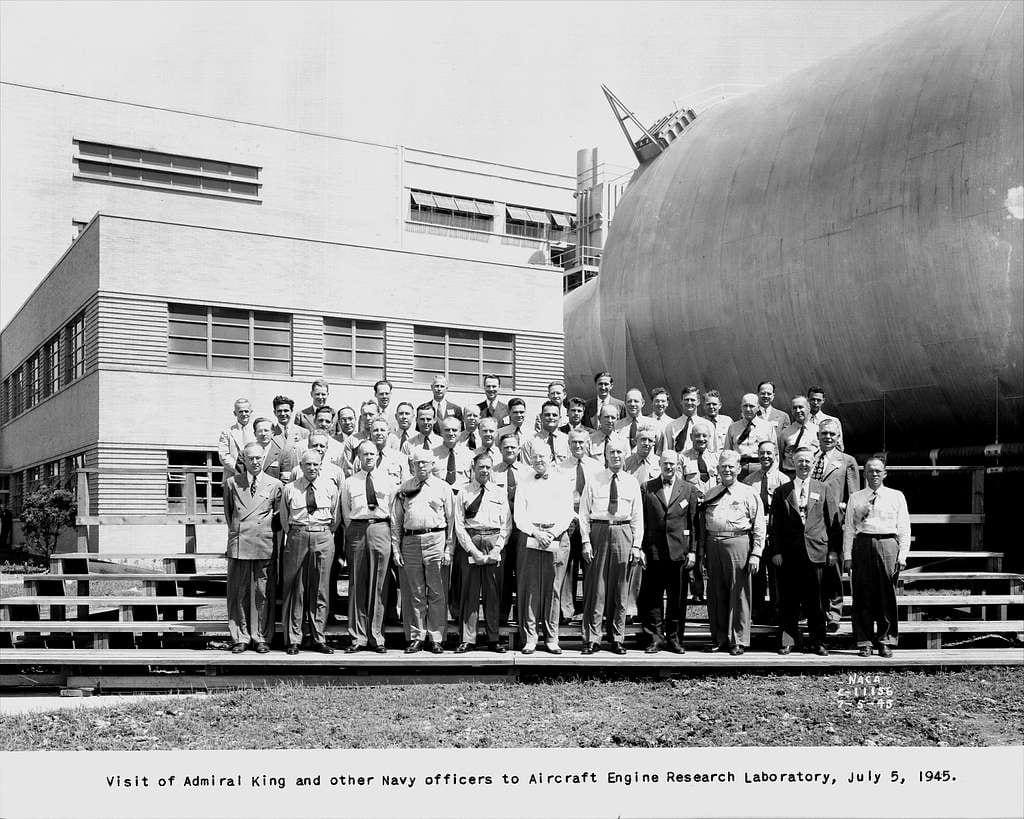
The significance of the 1945 pilot photograph
A surviving NACA photograph from 1945 shows a group of research pilots associated with the Cleveland laboratory.
The group includes Joseph Walker and William Swann.
The photograph provides an important visual connection between the men and the institution whose research would later become part of NASA.
For the AVIGO article, it offers something especially valuable: a human dimension.
The pilots were not abstract figures in an engineering report.
They were real people who accepted the responsibilities and uncertainties of experimental aviation.
Their work helped transform scientific theories into practical knowledge.
Suggested photograph: NACA research pilots, 1945, including William Swann and Joseph Walker.
Public-domain NACA pilots photograph
Historical reference: NASA — XP-82 research program
Chapter Six
December 14, 1949: The Day the Twin Mustang Nearly Disappeared
By late 1949, XP-82 serial number 44-83887 had already lived two remarkable lives.
It had begun as an experimental fighter intended for the final phase of World War II.
It had then become a research aircraft helping NACA investigate the propulsion technologies of the future.
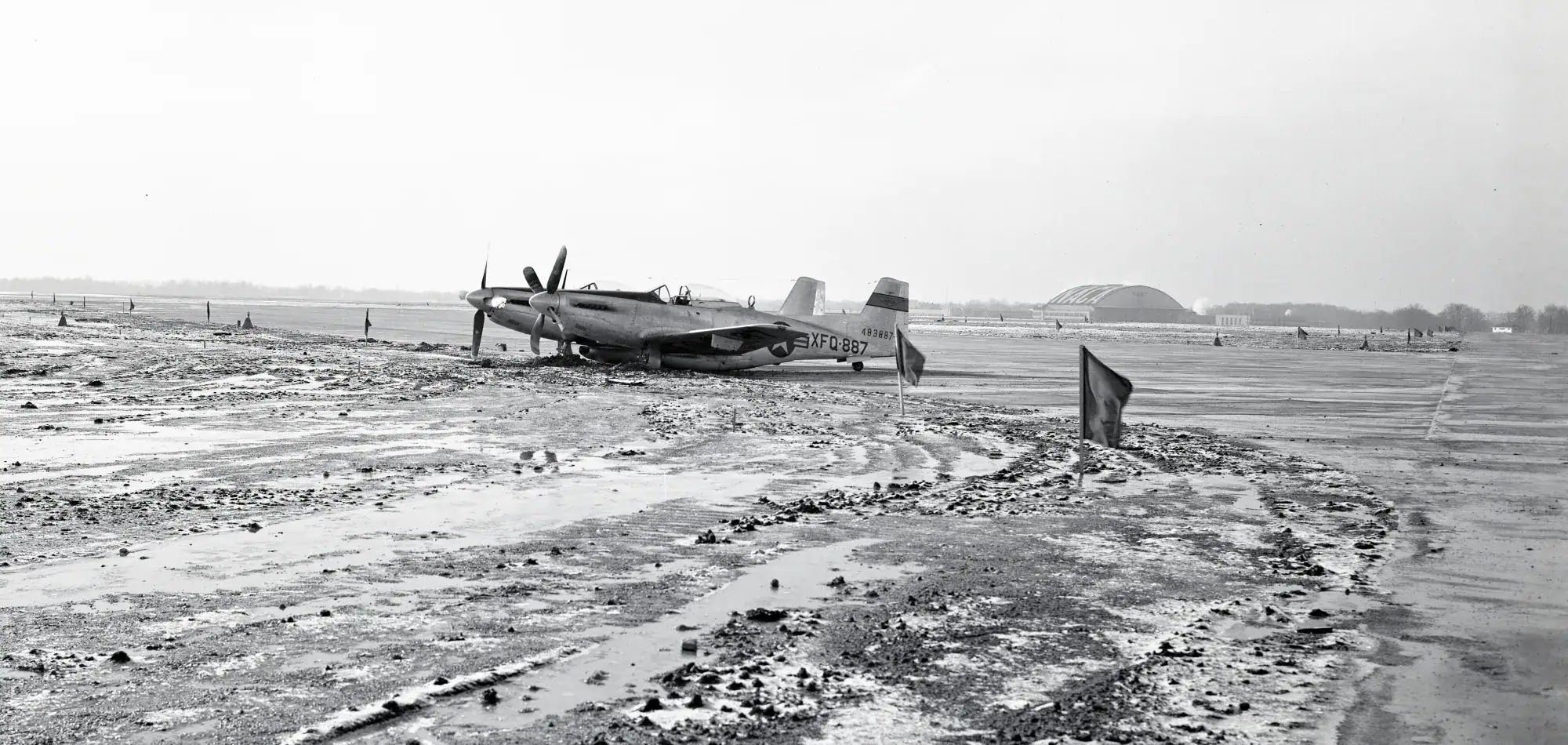
But on December 14, 1949, that history came dangerously close to ending.
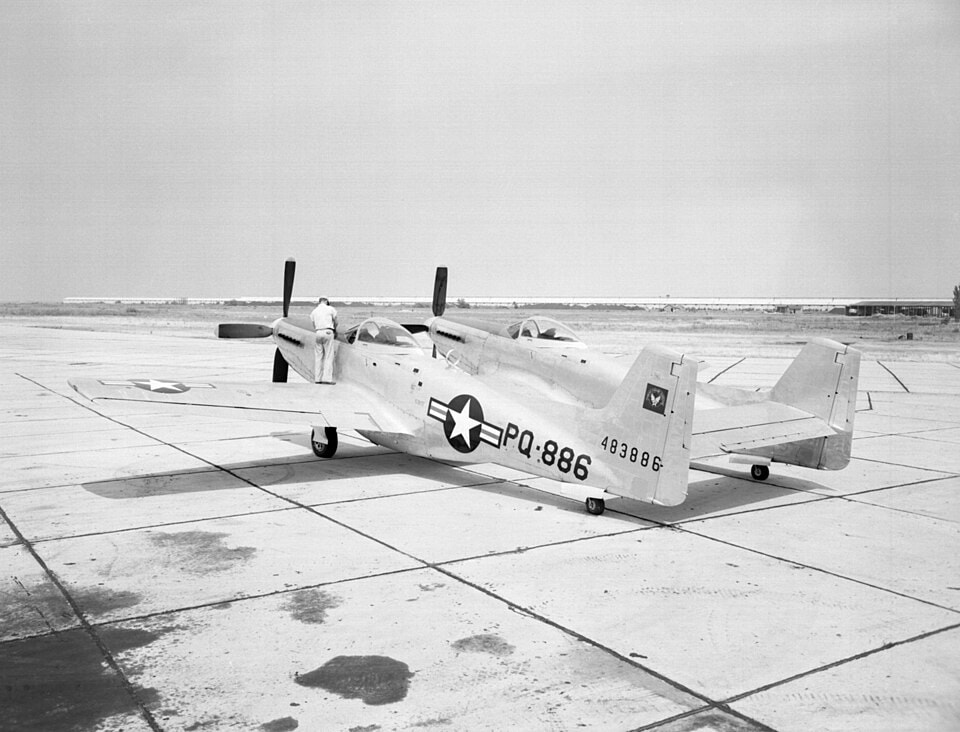
The aircraft was returning to Cleveland Municipal Airport after a research flight.
Winter weather had created hazardous runway conditions.
As the Twin Mustang landed, it encountered patches of ice.
The aircraft skidded sideways and left the runway.
Unusually warm weather earlier in the week had softened the surrounding ground, creating muddy conditions.
When the airplane departed the paved surface, its landing gear sank into the mud.
The forces imposed on the aircraft caused extensive damage.
The center wing structure, landing gear, radiators, and propeller were among the affected components.
Fortunately, the pilots escaped injury.
The airplane itself was not so fortunate.
The damage was severe enough that NACA decided against repairing the prototype for continued research use.
The aircraft was moved away from normal operations, and its engines and propellers were removed.
For the research organization, the decision was understandable.
The airplane was an aging experimental prototype, and other aircraft could support the remaining work.
NACA subsequently obtained another Twin Mustang, an F-82E, serial number 44-65168, to continue the research program.
This is an important historical distinction.
The replacement aircraft was not the original XP-82 prototype 44-83887.
The two aircraft had separate identities and histories.
But for 44-83887, the accident marked the end of its flying career.
At least, that was what everyone believed at the time.
The prototype had survived the transition from war to peace and from military development to aerospace research.
Now it faced an even more uncertain future.
It was no longer considered useful as an operational aircraft.
Its engines were gone.
Its structure was damaged.
Its prospects were poor.
Yet the airplane had one thing working in its favor.
Someone would recognize that its historical value was greater than its value as scrap metal.
Historical reference: NASA — December 1949 accident and subsequent history
Suggested photograph: NASA’s archival image of the damaged aircraft beside the Cleveland runway.
Chapter Seven
Walter Soplata: The Collector Who Saved a Forgotten Prototype
The survival of many historic aircraft has depended on individuals who saw value in machines that governments and commercial operators considered obsolete.
Walter Soplata was one of those individuals.
An Ohio collector with a passion for preserving retired military aircraft, Soplata accumulated an extraordinary collection of aviation artifacts over the years.
His property in Newbury, Ohio, became home to aircraft that might otherwise have disappeared entirely.
Among them was the damaged XP-82.
Following its withdrawal from NACA service, the aircraft was sold to Soplata.
Transporting such an unusual airplane presented obvious difficulties.
According to NASA’s historical account, Soplata divided the aircraft to move it to his property.
The damaged prototype would remain there for decades.
During those years, the aircraft deteriorated.
Important components were separated or sold.
NASA records that the military later borrowed the right fuselage for destructive testing.
By the time restoration enthusiasts began seriously investigating the airplane, its surviving structures represented only part of what had once been a complete aircraft.
Yet the essential fact remained.
The original prototype had not vanished.
Its surviving material could still be identified.
Its serial number and historical record remained connected to the airframe.
This is why Soplata’s role is so important.
He did not return the aircraft to flight.
He did not complete a museum-quality restoration.
But by preserving its remains, he made the possibility of a future restoration real.
The difference between a lost aircraft and a recoverable aircraft can sometimes be as simple as one person’s refusal to let it disappear.
For the XP-82, that person was Walter Soplata.
Historical reference: NASA — Soplata collection and aircraft recovery
Chapter Eight
Tom Reilly: The Man Who Refused to Accept That It Was Impossible
In 1997, veteran aircraft restorer Tom Reilly visited Walter Soplata’s property.
Among the deteriorating aircraft and scattered components, Reilly encountered the remains of XP-82 serial number 44-83887.
For most observers, the project would have appeared overwhelming.
The airplane was incomplete.
Major components were missing.
Its unusual design meant that many replacement parts could not simply be ordered from existing suppliers.
Its engines presented a separate challenge.
And the structure itself had suffered damage, deterioration, and decades of exposure.
Restoring the aircraft for static display would have been difficult enough.
Restoring it to flying condition seemed almost unimaginable.
But Reilly recognized the aircraft’s significance.
It was one of the original prototypes of an exceptionally rare American fighter.
It had served as a NACA research aircraft.
It had carried experimental ramjet equipment.
And it represented an opportunity to recover an important piece of aviation history.
Reilly began searching for the components, technical resources, and financial support that such a restoration would require.
For years, the project remained more ambition than active construction.
Then, in 2008, the aircraft was acquired and the restoration began in earnest.
Reilly and his team worked from Douglas, Georgia.
The undertaking quickly became one of the most ambitious historic military aircraft restoration projects of its era.
Rebuilding an aircraft that barely existed
A conventional restoration often involves disassembling an existing aircraft, inspecting its components, repairing or replacing damaged parts, and rebuilding the machine.
The XP-82 project was far more complicated.
Significant portions of the airplane were missing.
Some components were so rare that replacements could not be readily found.
Others had to be manufactured from scratch.
The team searched for usable parts across the United States and internationally.
Components were recovered from other F-82 aircraft, including material associated with a historic crash site in Alaska.
These discoveries helped the restoration progress.
But they also required careful engineering work.
Parts from different aircraft could not simply be assumed to fit without inspection or modification.
The team needed to understand the original construction methods and recreate components compatible with the surviving prototype.
The Merlin engine challenge
The original XP-82 used two powerful Merlin-derived engines.
Restoring and sourcing appropriate engines presented another major obstacle.
The engines were historically significant, mechanically complex, and increasingly rare.
The restoration required not only suitable powerplants but also compatible supporting systems, controls, and accessories.
Every element had to work within the unusual Twin Mustang configuration.
A restoration measured in human effort
The scale of the work was extraordinary.
According to EAA and NASA, the restoration required approximately 207,000 labor hours over more than a decade.
That number deserves consideration.
It represents years of accumulated work by skilled mechanics, fabricators, engineers, aviation enthusiasts, and volunteers.
It represents countless decisions about how to recreate missing components.
It represents the effort required to turn incomplete historic structures into an aircraft capable of passing modern airworthiness inspections.
The restoration was not simply a mechanical exercise.
It was a reconstruction of lost manufacturing knowledge.
The team had to recover the methods, dimensions, and technical understanding necessary to rebuild an aircraft whose original production program had ended generations earlier.
That accomplishment is historically significant in its own right.
The Twin Mustang had originally demonstrated American engineering ambition.
Its restoration would demonstrate the same quality in another generation.
Historical references:
NASA — Tom Reilly and the restoration
EAA — The XP-82 Makes the Journey to AirVenture
Chapter Nine
December 31, 2018: The Unexpected Flight
After more than a decade of restoration, the XP-82 was approaching the moment everyone had been working toward.
The aircraft had been rebuilt.
Its engines were operational.
Its systems had been tested.
The remaining work included the careful procedures required before a restored aircraft could be cleared for flight.
On December 31, 2018, test pilot Ray Fowler was conducting a high-speed taxi test.
The plan was not to perform a normal flight.
The aircraft was expected to accelerate, briefly lift off, return to the runway, and stop.
But the Twin Mustang had other ideas.
As the engines developed power, the aircraft accelerated with extraordinary force.
EAA reported that the two engines produced a combined 3,720 horsepower.
Once the airplane lifted from the runway, Fowler recognized that attempting to land and stop within the remaining distance could create an unnecessary risk.
He made the decision to continue flying.
For approximately five minutes, the XP-82 was airborne.
The event was unexpected.
There had been no elaborate public announcement.
No carefully choreographed ceremony.
No crowd assembled for a historic first flight.
Yet the result was extraordinary.
For the first time since the December 1949 accident, aircraft 44-83887 was flying again.
The initial flight demonstrated that the airplane could operate successfully after its remarkable reconstruction.
According to EAA’s account, the aircraft flew without significant airframe discrepancies during the brief test.
Its systems performed normally.
The airplane was stable.
The restoration team had achieved something that once seemed almost impossible.
January 28, 2019: The official return
The aircraft’s first planned official post-restoration flight followed on January 28, 2019.
This flight marked the formal culmination of years of work.
A prototype that had been withdrawn from service almost seventy years earlier had returned to operational condition.
It was a rare achievement in historic aviation.
The aircraft was no longer merely a preserved relic.
It was once again capable of doing what its original engineers had designed it to do.
Fly.
Historical references:
EAA — XP-82 Twin Mustang Makes First Flight in Decades
NASA — Return to flight in 2019
Chapter Ten
Oshkosh: An American Legend Returns to the Public
During the summer of 2019, the restored XP-82 appeared at EAA AirVenture Oshkosh in Wisconsin.
AirVenture is one of the world’s most important aviation gatherings.
It brings together aircraft owners, pilots, engineers, restorers, manufacturers, and enthusiasts from across the globe.
For a historic airplane, appearing at Oshkosh is an opportunity to connect its story with the aviation community.
For the XP-82, the event represented something more.
It was a public celebration of an extraordinary engineering achievement.
Visitors could see an airplane whose design originated during World War II.
They could examine the unusual twin-fuselage configuration.
They could appreciate the complexity of its restoration.
And they could encounter a tangible link to the early days of American aerospace research.
The aircraft was no longer hidden among deteriorating remains on an Ohio property.
It had become a living demonstration of what determined preservation could accomplish.
The restoration also highlighted a broader truth about American aviation history.
Historic aircraft are not preserved by institutions alone.
Their survival frequently depends on individual initiative, specialized technical knowledge, private investment, and the commitment of people who believe the past is worth protecting.
Tom Reilly’s team had demonstrated that principle on an extraordinary scale.
The XP-82’s appearance at Oshkosh was therefore not simply another warbird exhibition.
It was the public return of a machine that had survived multiple generations of technological change.
Historical reference: EAA — The XP-82 Makes the Journey to AirVenture
Chapter Eleven
Titusville, Florida: A New Chapter in the Aircraft’s Story
After its restoration and public appearances, the XP-82 became associated with another important aviation location.
Titusville, Florida.
Located near Kennedy Space Center and the Atlantic coast, Titusville occupies a special place in American aerospace history.
The surrounding region has witnessed some of the nation’s most important achievements in space exploration.
Mercury, Gemini, Apollo, Space Shuttle, and later commercial spaceflight programs have all contributed to the region’s identity.
It is therefore fitting that an aircraft with documented connections to NACA’s early propulsion research should find a home in this part of Florida.
NASA’s historical account identifies the restored XP-82 as displayed at the Valiant Air Command Warbird Museum in Titusville.
The museum preserves and interprets military aviation history through aircraft, exhibits, and educational programs.
For visitors, the Twin Mustang offers an opportunity to encounter a rare aircraft whose story extends beyond combat aviation.
It is a prototype.
A research aircraft.
A survivor of a serious accident.
And the product of an extraordinary modern restoration.
Its presence in Florida also creates a meaningful geographic connection with AVIGO Watch Company.
AVIGO is based in Florida, a state deeply associated with American aviation and spaceflight.
The proximity does not itself create a historical relationship between the watch company and the aircraft.
But it offers an opportunity to explore that history through direct research, documentation, and relationships with the organizations and individuals responsible for preserving it.
For a company seeking to celebrate American aerospace heritage, few aircraft provide such a compelling starting point.
Historical reference: NASA — XP-82 restoration and museum display
Chapter Twelve
The Meaning of Original Material
For AVIGO Watch Company, the XP-82 represents more than an opportunity to tell an interesting aviation story.
It also raises a question central to the American Aerospace Heritage Collection.
Can an authentic piece of American aviation history be preserved within a modern timepiece?
The concept is straightforward.
Historic aircraft occasionally undergo repairs, restoration, or replacement of components.
Some removed material may no longer be suitable for airworthy use.
Depending on its provenance, condition, ownership, and suitability, a small portion of that material may be appropriate for preservation in another form.
AVIGO’s objective is to explore whether such material can be responsibly acquired, documented, and incorporated into a limited-production watch.
But with an aircraft as historically significant as the XP-82, authenticity must be treated seriously.
Why provenance matters
The restored XP-82 carries the identity of serial number 44-83887.
However, its restoration involved the use of components recovered from multiple sources.
Some material originated with the original prototype.
Other components were acquired from separate aircraft.
Still others were newly manufactured to complete the restoration.
These distinctions are essential.
A piece of aluminum removed from the restored aircraft is not automatically an original 1945 component from serial number 44-83887.
It may be an authentic component associated with the restored airplane.
It may have originated from another F-82.
Or it may be a modern replacement manufactured during the restoration.
Each possibility has a different historical meaning.
AVIGO believes those differences should be documented rather than obscured.
A watch incorporating authentic original XP-82 material should have evidence supporting that claim.
A watch incorporating material from a restoration-era replacement component should be described accordingly.
And material whose provenance cannot be established should never be marketed as originating from a specific historic aircraft.
A chain of custody
A credible heritage-material program requires documentation.
Ideally, that documentation would identify the original source, the component’s history, the circumstances of its removal, and the transfer of the material.
Photographs, restoration records, signed statements, component identification, and other supporting documents may help establish that history.
The objective is to preserve more than the physical material.
It is to preserve the story attached to it.
Because the historical value of a piece of aircraft metal does not come simply from its age.
It comes from knowing what it was, where it came from, and how it participated in the aircraft’s history.
That is what transforms ordinary material into a meaningful historical artifact.
Chapter Thirteen
Why the XP-82 Became an AVIGO Heritage Project
AVIGO Watch Company traces its historical identity to 1928, an era when aviation was rapidly transforming the world.
The early twentieth century was a period of extraordinary experimentation.
Aircraft were becoming faster, more reliable, and capable of traveling greater distances.
Pilots were challenging records and expanding the boundaries of what was possible.
Engineers were developing new technologies to support an increasingly ambitious aviation industry.
The XP-82 belongs to the next great chapter of that American story.
Its original design reflected the demands of World War II.
Its NACA research career reflected the emergence of the jet and missile ages.
Its association with Joseph Walker connects the airplane to the generation of research pilots who helped expand flight toward space.
And its restoration demonstrates the determination of modern Americans to preserve the achievements of those who came before them.
These qualities make the Twin Mustang an especially appropriate subject for AVIGO’s American Aerospace Heritage program.
The objective is not to borrow the prestige of a famous aircraft.
It is to recognize and document an authentic historical achievement.
A watch as a historical connection
A mechanical watch is itself an expression of engineering.
Its operation depends on carefully manufactured components working together within extremely small tolerances.
Its value can extend beyond its practical function.
It may represent craftsmanship, technical ingenuity, personal history, and the passage of time.
For AVIGO, those qualities create a natural connection with aviation.
The company seeks to develop timepieces that celebrate American aerospace achievements through design, storytelling, and, where possible, carefully documented historical materials.
The XP-82 offers an opportunity to unite these ideas.
Its history spans more than eight decades.
It connects multiple generations of American engineers, pilots, and restorers.
And it demonstrates how a machine originally designed for one purpose can acquire an entirely different historical significance.
AVIGO’s interest in the aircraft is therefore not limited to its unusual appearance.
It is rooted in the extraordinary sequence of events that shaped its life.
From the Pacific war planning of the 1940s to NACA’s propulsion research.
From an icy Cleveland runway to decades of abandonment.
From Tom Reilly’s restoration workshop to the skies over Georgia.
Few aircraft have experienced such a remarkable journey.
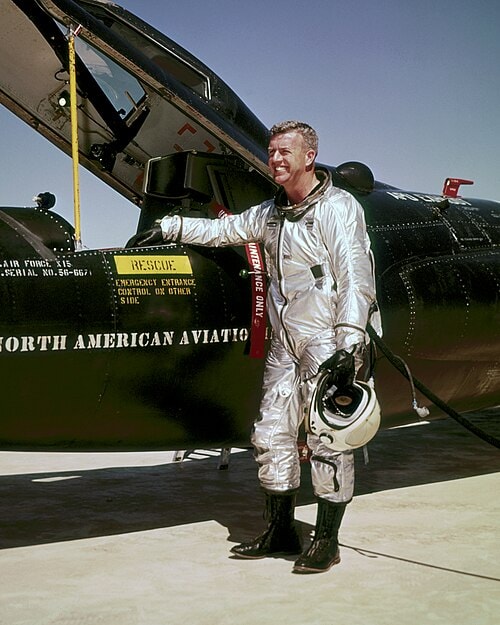
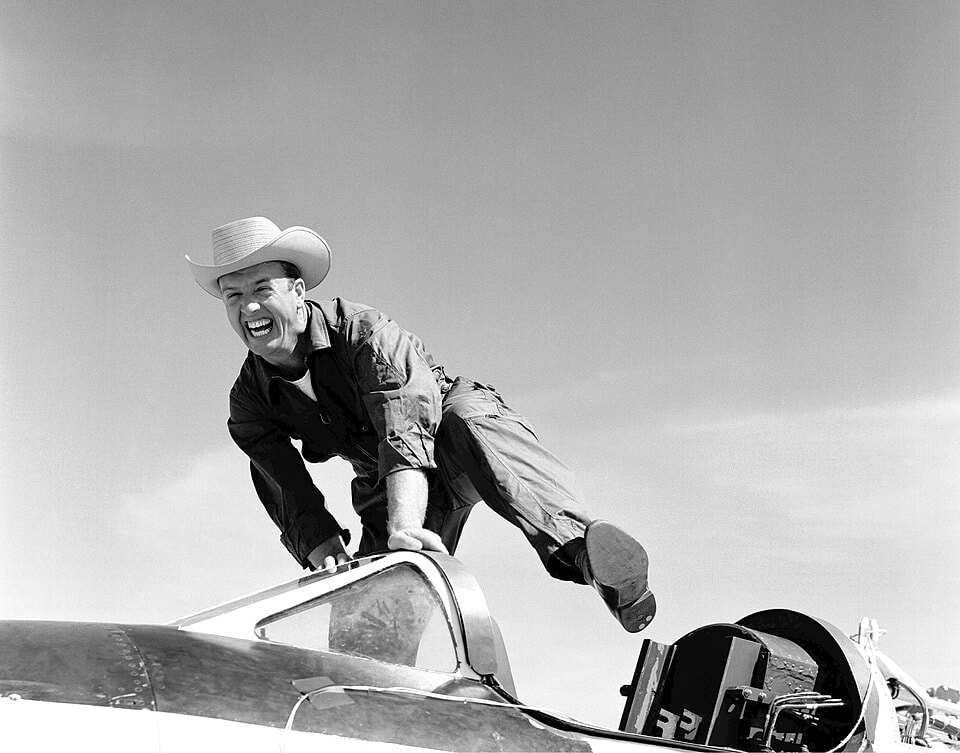
Walker made the first NASA X-15 flight on March 25, 1960. He flew the research aircraft 24 times and achieved its fastest speed and highest altitude. He attained a speed of 4,104 mph (Mach 5.92) during a flight on June 27, 1962, and reached an altitude of 354,300 feet on August 22, 1963 (his last X-15 flight).
He was the first man to pilot the Lunar Landing Research Vehicle (LLRV) that was used to develop piloting and operational techniques for lunar landings.
Walker was born February 20, 1921, in Washington, Pa. He lived there until graduating from Washington and Jefferson College in 1942, with a B.A. degree in Physics. During World War II he flew P-38 fighters for the Air Force, earning the Distinguished Flying Cross and the Air Medal with Seven Oak Clusters.
Walker was the recipient of many awards during his 21 years as a research pilot. These include the 1961 Robert J. Collier Trophy, 1961 Harmon International Trophy for Aviators, the 1961 Kincheloe Award and 1961 Octave Chanute Award. He received an honorary Doctor of Aeronautical Sciences degree from his alma mater in June of 1962. Walker was named Pilot of the Year in 1963 by the National Pilots Association.
He was a charter member of the Society of Experimental Test Pilots, and one of the first to be designated a Fellow. He was fatally injured on June 8, 1966, in a mid-air collision between an F-104 he was piloting and the XB-70.
Chapter Fourteen
The American Aerospace Heritage Collection: Carrying History Forward
The history of American aviation is often told through its most famous machines.
The Wright Flyer.
The P-51 Mustang.
The B-29 Superfortress.
The Bell X-1.
The X-15.
The Apollo spacecraft.
The Space Shuttle.
Each represents a moment when American engineering expanded the boundaries of possibility.
But the history connecting those milestones is equally important.
Between the famous achievements were thousands of experiments, research programs, test flights, and technological failures.
Those efforts supplied the knowledge that made later breakthroughs possible.
The XP-82 is part of that connecting history.
It was born from the demands of World War II.
It became a research aircraft for the organization that preceded NASA.
It carried experimental ramjet equipment into the sky.
It was flown by pilots associated with the early development of American high-speed research aviation.
And it survived long enough to become the subject of one of the most remarkable warbird restorations of the modern era.
The aircraft’s history is not a single event.
It is a continuous story of adaptation, experimentation, loss, recovery, and achievement.
That is the kind of history AVIGO seeks to preserve.
A commitment to authenticity
The American Aerospace Heritage Collection is intended to recognize real achievements, real aircraft, and real people.
Where historic materials are used, their origins should be documented.
Where historical claims are made, they should be supported by credible records.
And where partnerships or relationships are established, they should be represented accurately.
The goal is to create something that remains meaningful long after the original excitement surrounding a new watch has passed.
A timepiece may eventually be passed from one generation to another.
So can a story.
And when a watch carries a properly documented connection to an important aircraft, those two forms of heritage can become inseparable.
Epilogue
The Aircraft That Refused to Disappear
In 1945, an unusual twin-fuselage fighter took to the skies at the conclusion of the greatest conflict the world had ever known.
Its designers had created it to answer a specific military challenge.
But history had other plans.
The airplane would become a platform for experimental propulsion research.
It would help carry the work of NACA scientists into the sky.
It would be associated with pilots whose careers connected the piston-engine era with the beginnings of spaceflight.
Then, after a disastrous landing in Cleveland, it would disappear from active aviation for almost seventy years.
Its survival would depend on a collector who recognized its historical importance.
Its return would depend on a restorer who believed an extraordinary goal was still possible.
And when it finally flew again in 2018 and 2019, the aircraft became a testament to the persistence and technical skill of another generation of Americans.
The XP-82 Twin Mustang is more than a rare airplane.
It is a reminder that great achievements do not always occur in a straight line.
Sometimes the most important stories involve unfinished missions, unexpected discoveries, damaged machines, and people who refuse to abandon them.
At AVIGO Watch Company, we believe those stories deserve to endure.
Not merely as photographs.
Not merely as exhibits.
But as carefully preserved connections between the achievements of the past and the generations that follow.
Because American aerospace history is not simply something to remember.
It is something worth carrying forward.
AVIGO WATCH COMPANY
Born in 1928. Returning nearly a century later.
American Aerospace Heritage Collection
Historical research, aviation preservation, and the pursuit of authentic American craftsmanship.
Historical References and Research Sources
- NASA Glenn Research Center — The NACA’s XF-82 Twin Mustang Returns to Flight After 70 Years. Primary reference for the aircraft’s NACA research, ramjet missions, pilots, accident, and restoration.
- NASA — The National Advisory Committee for Aeronautics. Background on the research organization that preceded NASA.
- Experimental Aircraft Association — XP-82 Twin Mustang Makes First Flight in Decades. Account of the December 31, 2018 flight.
- EAA AirVenture — The XP-82 Makes the Journey to AirVenture. Restoration history and public appearance.
- U.S. Air Force historical photography — XP-82 serial 44-83887, 1945, public domain.
- NACA historical photography — Research pilots at the Aircraft Engine Research Laboratory.
Editorial note: This article distinguishes the original XP-82 prototype from later F-82 aircraft and separates established historical facts from AVIGO’s proposed heritage-material activities. No claim is made that AVIGO has already acquired original XP-82 components or received official endorsement from NASA, NACA, the U.S. Air Force, or the aircraft’s restoration organizations.